Air pillows are one of the easiest void-fill materials to use badly. Because they look simple, a roll of film and a machine that puffs them up, it is tempting to assume any pillow, in any quantity, will protect any product. It will not. Most of the damage claims and wasted spend that come across a packing bench trace back to the same handful of avoidable errors. Here are the ones worth fixing first, and what to do instead.
Mistake one: treating air pillows as impact armor
The most common misunderstanding is expecting an air pillow to absorb a hard drop the way molded foam does. That is not what it is for. Air pillows are a void-fill and immobilization material: their job is to fill the empty space around a product so it cannot shift, tumble, or hit the box wall in transit. They do that extremely well for light-to-medium items, generally up to about 30 to 40 pounds per carton, but they are not a substitute for edge protection on a fragile, heavy, or oddly balanced item. For those, the pillows should surround a product that is already wrapped or corner-protected, not stand in for that inner layer. Get the roles right and the pillow does the job it is good at.
Mistake two: filling the void only partway
A half-filled box is a box that fails. If a product can still move when you gently shake the sealed carton, the void fill has not done its job, and the empty space becomes room for the item to build momentum against the walls. The goal is to fill essentially all of the empty volume so the contents are held snug, with pillows packed against every side that would otherwise let the product travel. This is also where under-ordering bites: buyers estimate how many pillows they need based on the box, forget that a proper fill leaves no meaningful gaps, and run short mid-shift. Size the supply to fully immobilize, not to loosely occupy.
Mistake three: using the wrong pillow size for the gap
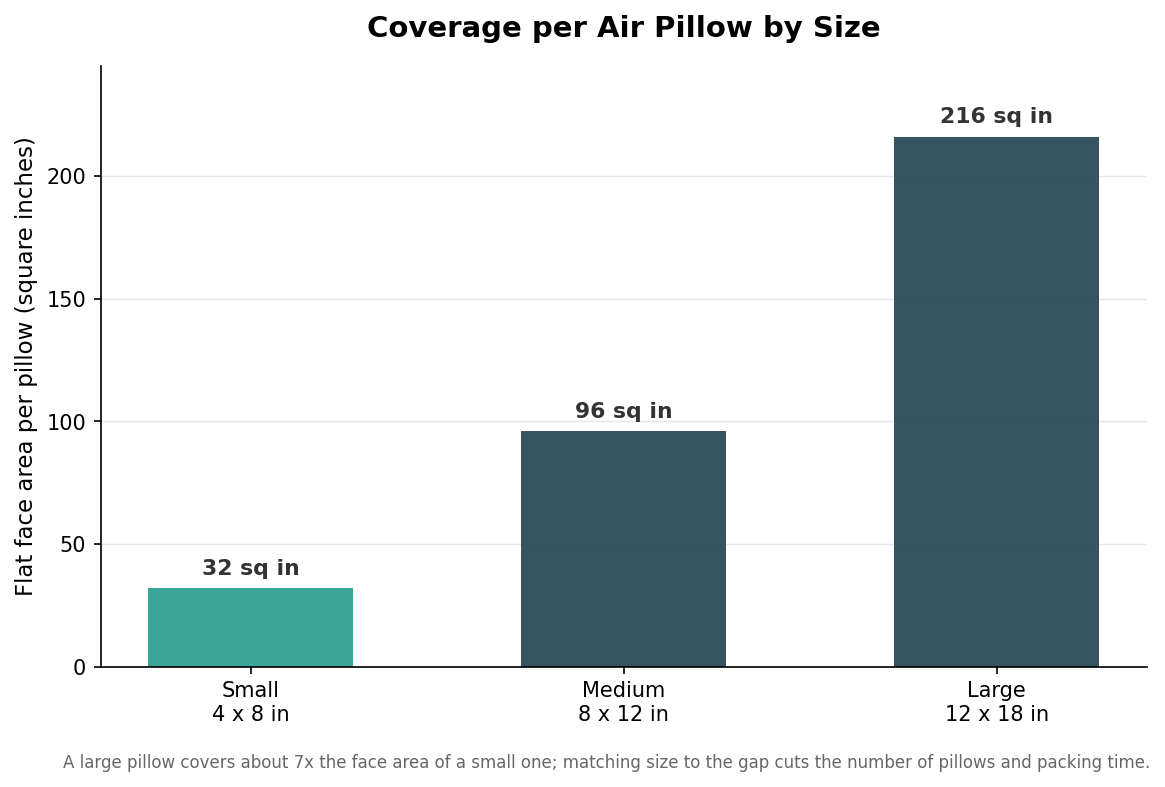
Air pillows come in a range of sizes, and picking the wrong one quietly costs time and money. A small 4 by 8 inch pillow is meant for tight gaps and wrapping individual items; a 8 by 12 inch pillow suits medium products; and a 12 by 18 inch pillow is built for large voids or as a base layer. Because a large pillow covers roughly seven times the face area of a small one, trying to fill a big cavity with handfuls of the smallest size means more pillows, more air, and slower packing, while cramming an oversized pillow into a shallow gap leaves corners exposed. Matching size to the space is the single fastest way to cut both material use and packing time.
Mistake four: running one film grade for everything
Air pillow film is not all the same thickness. A standard grade around 2 mil is right for typical void fill, while a heavier grade near 4 mil resists punctures better for products with harder edges or heavier weight. Running the thin economy film for everything to save money is a false economy when a single popped pillow lets the contents shift and arrive damaged; running the heavy grade for lightweight books or apparel, on the other hand, spends more film than the job needs. The fix is to stock the grade that matches your typical product and step up only for the lines that genuinely punish thin film. Exact thickness figures vary by supplier, so confirm the grade on the spec sheet rather than assuming.
Mistake five: ignoring storage and recyclability
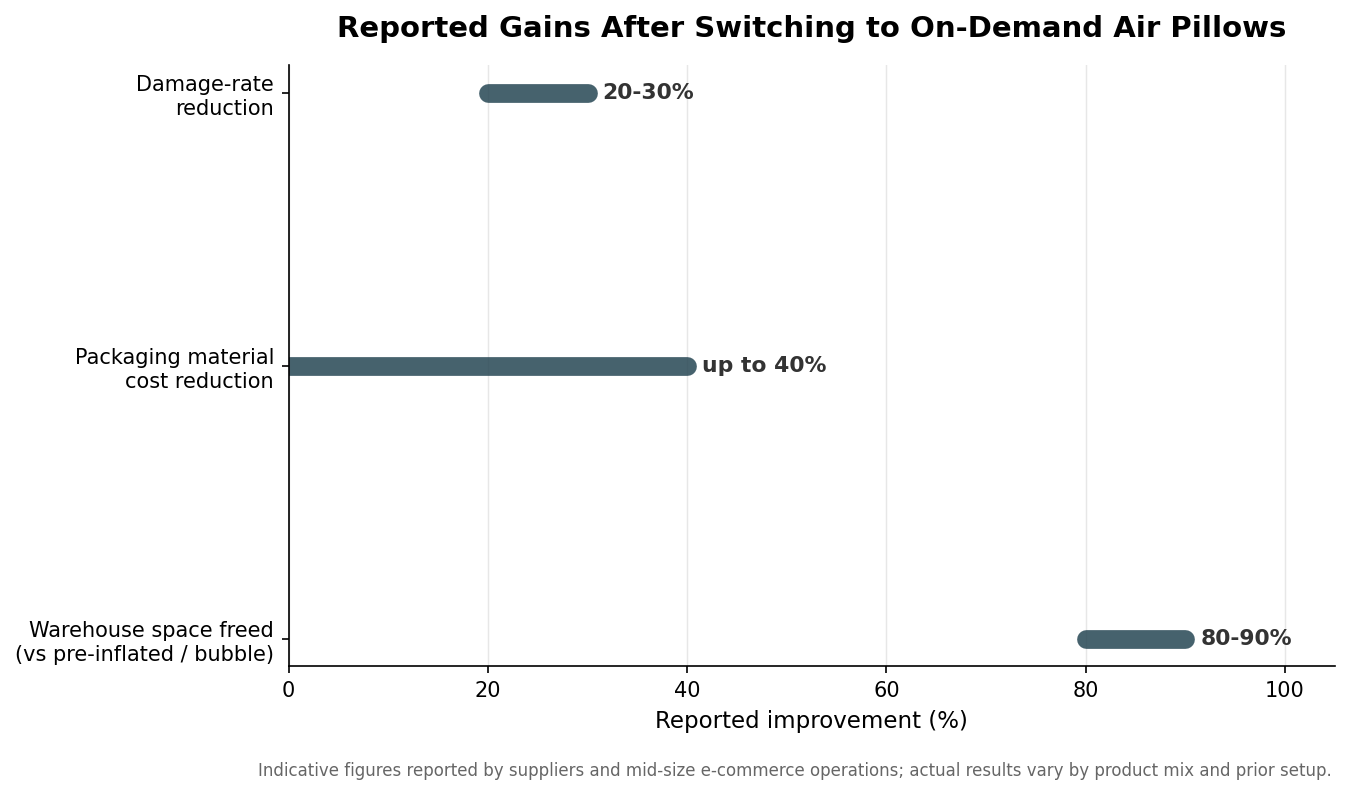
Two decisions around the pillows, rather than the pillows themselves, are easy to overlook. The first is storage. Buying pre-inflated cushioning, or defaulting to bulky bubble wrap, wastes warehouse space, because the whole point of pillow film is that it ships flat and inflates on demand; operations that move to on-demand inflation commonly free up a large share of the space previously tied up in packaging stock. The second is end-of-life. Air pillow film is typically a polyethylene that is store drop-off recyclable wherever plastic film is accepted, and some lines are curbside recyclable, which is worth confirming and even printing on the pillow if your customers care about packaging waste. Neither decision affects protection, but both affect cost and how the unboxing lands.
There is a smaller sixth mistake worth naming, because it applies specifically to printed pillows: wasting the branding. If you have gone to the trouble of custom-printing your film, orient and place the pillows so the mark is actually visible when the box opens, on the top layer rather than buried at the bottom, and keep the artwork simple enough to read on a curved, inflated surface. A logo that looks crisp on a flat proof can distort once the pillow puffs up, so design for the inflated shape, not the flat film.
Getting it right from the first order
None of these fixes are complicated, and together they change the economics. Operations that match pillow size and grade to their products, fill voids properly, and switch to on-demand film routinely report meaningful drops in damage rates and material cost, along with far less space consumed by packaging. The figures above are indicative and depend heavily on what you ship and what you were doing before, so treat them as direction rather than promises. But the underlying lesson is consistent: air pillows reward matching the material to the job. Specify the sizes and grade you actually need, plan to fill the whole void, and the same pillows that were causing damage claims quietly stop being a problem.
Leave a Reply