Air pillows have a reputation problem. Because they are plastic and they arrive by the bagful, they read as wasteful, and a customer who unpacks a box full of them can walk away with a worse impression of the sender than the packaging deserves. The reality is more nuanced: an air pillow is one of the leanest void-fill materials you can ship, and it is recyclable, just not in the way most people assume. This guide explains what the film actually is, how it should be recycled, and what a brand can do to make its void fill genuinely greener rather than just greener-looking.
The good news is that they are mostly air
An inflated air pillow is roughly 99 percent air and about 1 percent film. That single ratio is the whole sustainability argument in miniature. To protect the same volume inside a carton, solid fills like foam planks or loose-fill peanuts commit far more material per box, while an air pillow does the job with a thin skin of plastic wrapped around a pocket of air. The pillows also hold their shape well enough to matter in transit; quality films retain more than 95 percent of their initial pressure after a month of storage, so a box packed today is still cushioned when it ships next week.
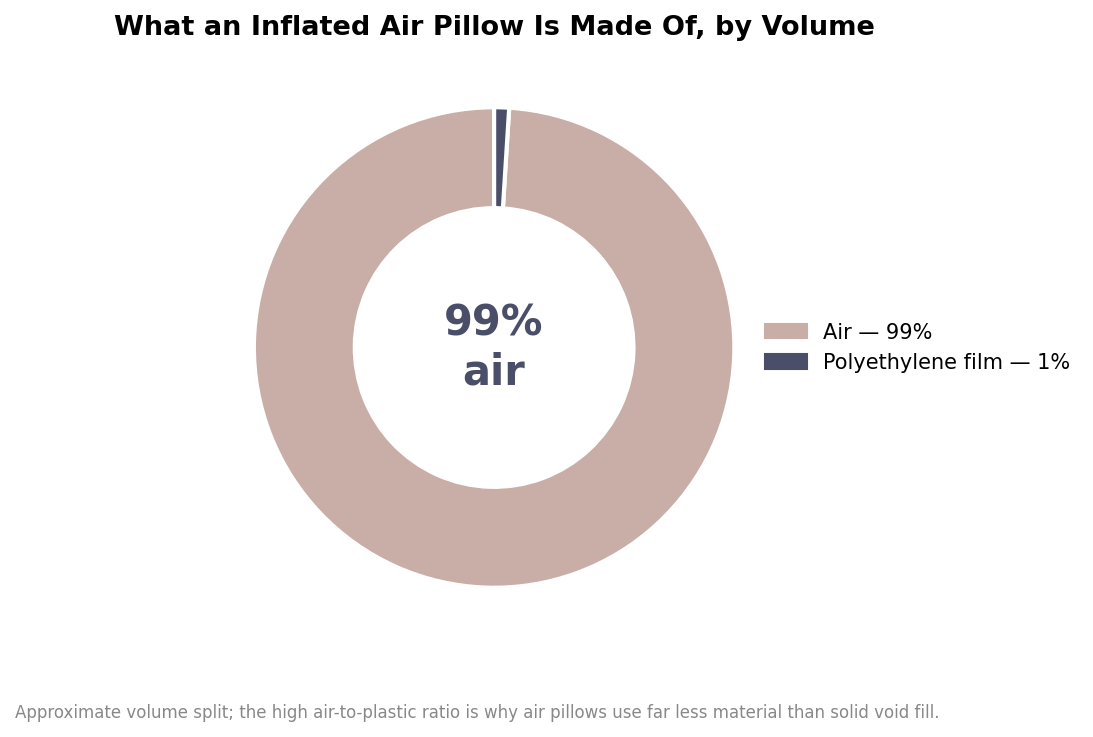
None of that makes the plastic disappear, but it reframes the comparison. The right question is rarely plastic versus no plastic; it is which void fill protects the product with the least material and the clearest end-of-life path. On the first count, air pillows are hard to beat.
Are they recyclable? Yes, but not curbside
Air-pillow film is polyethylene, the same family as grocery and produce bags, and it recycles the same way they do. That means it does not belong in your household commingled recycling bin, where thin film tangles equipment and is screened out. Instead it goes to store drop-off, the bins for plastic bags and film found at many grocery and retail entrances, or to a dedicated film program; national directories such as bagandfilmrecycling.org list participating locations. Some mailing and shipping centers will also take clean, undamaged packing materials, so it is worth a quick call to a local mail store before anything hits the trash. If no film drop-off exists in your area, the honest answer is that the pillows go in the garbage, because contaminating the curbside stream with film does more harm than good.
Deflate first, and the other handling rules
Pop and flatten the pillows before you recycle them. Film recyclers handle flat sheets, not inflated cushions, so deflated pillows travel and bale far more efficiently and are less likely to be rejected. Keep the material clean and dry, since food residue or tape contaminates a load, and bag the flattened film together rather than dropping loose pillows into a bin. The best outcome of all is often reuse: air pillows are perfectly good a second and third time, so keeping a bag of them by the packing bench for outgoing orders quietly halves their footprint before recycling ever enters the picture. Reuse first, recycle at film drop-off second, landfill only as a last resort is the order that actually reduces impact. One practical habit makes the difference on a packing line: keep two bins at the bench, one for reusable inflated pillows and one for flattened film awaiting a drop-off run, so the material is sorted the moment a box is opened rather than swept together and thrown out later.
Greener film: recycled content and compostable options
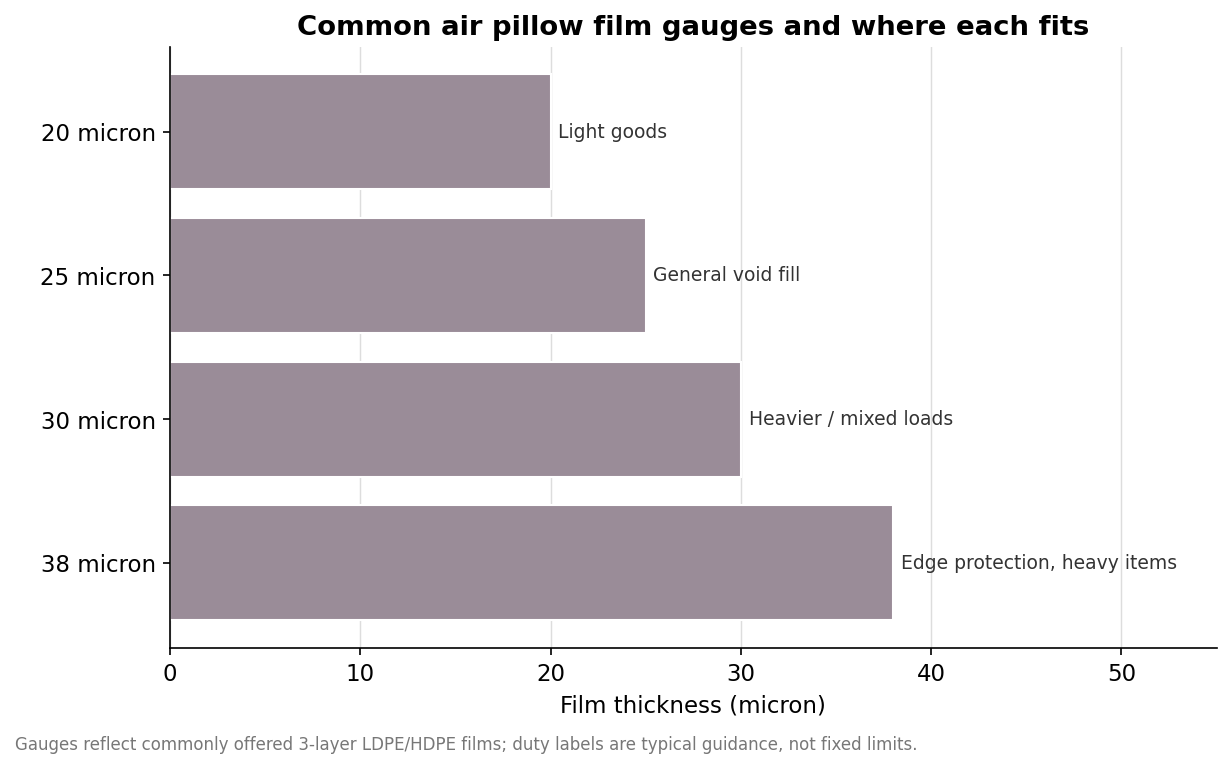
The film itself is where a brand can make a real, verifiable improvement. Standard air-pillow film is virgin polyethylene, but recycled-content films are now widely available. A common commercial grade blends about 50 percent recycled material, split into roughly 35 percent post-consumer and 15 percent post-industrial content, and higher grades push toward 100 percent post-consumer film. Because these run on the same inflation equipment, switching is usually a matter of specifying a different roll rather than changing machines.
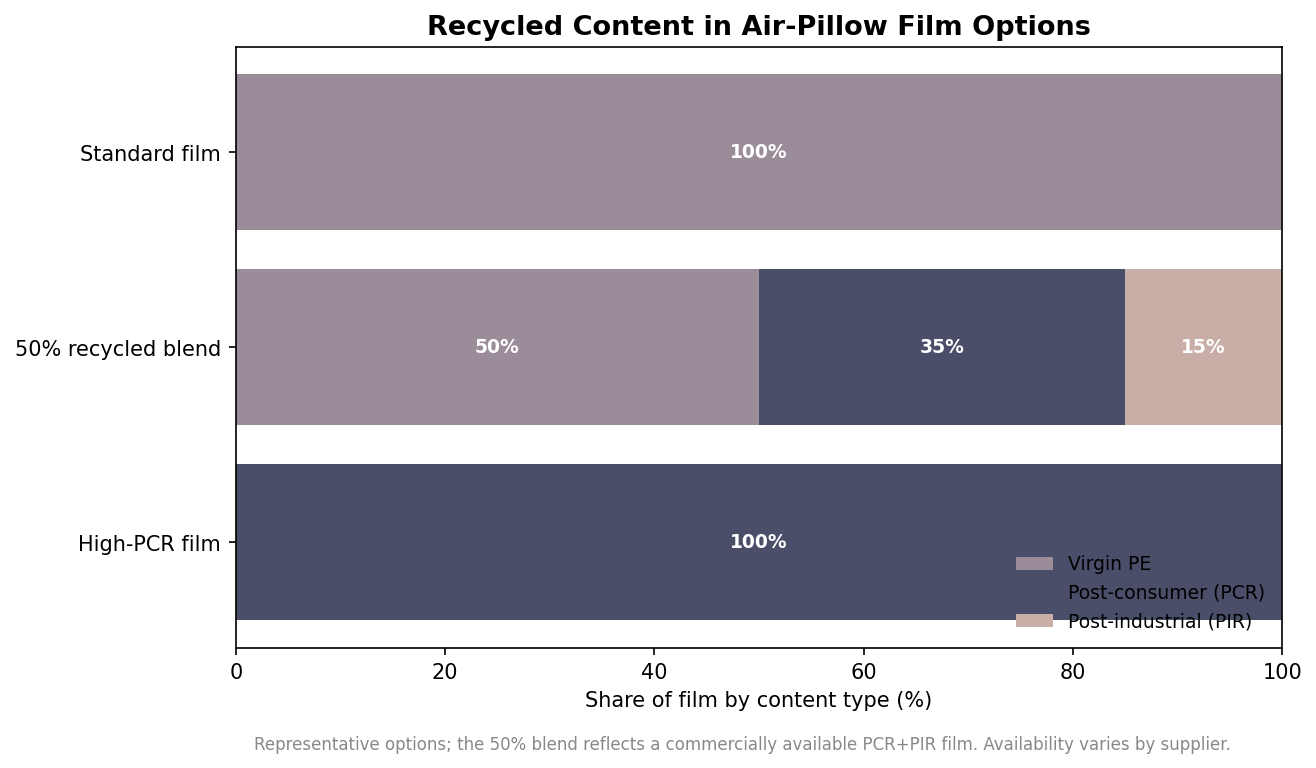
Compostable films are the other path, engineered to break down in home composting systems within roughly 90 to 180 days. They suit brands whose customers genuinely compost and whose messaging can explain the difference, but they are not a drop-in recycling solution: a compostable pillow tossed into a plastic-film drop-off is a contaminant, not an upgrade. Choose one lane and label it clearly, because the worst outcome is a well-meaning film that ends up in the wrong stream, where it can contaminate an otherwise recyclable bale or a compost batch and undo the good intention entirely. Recycled-content polyethylene is the safer default for most shippers because it plugs straight into the existing film-recycling infrastructure that customers already have access to.
What this means for a branded void-fill program
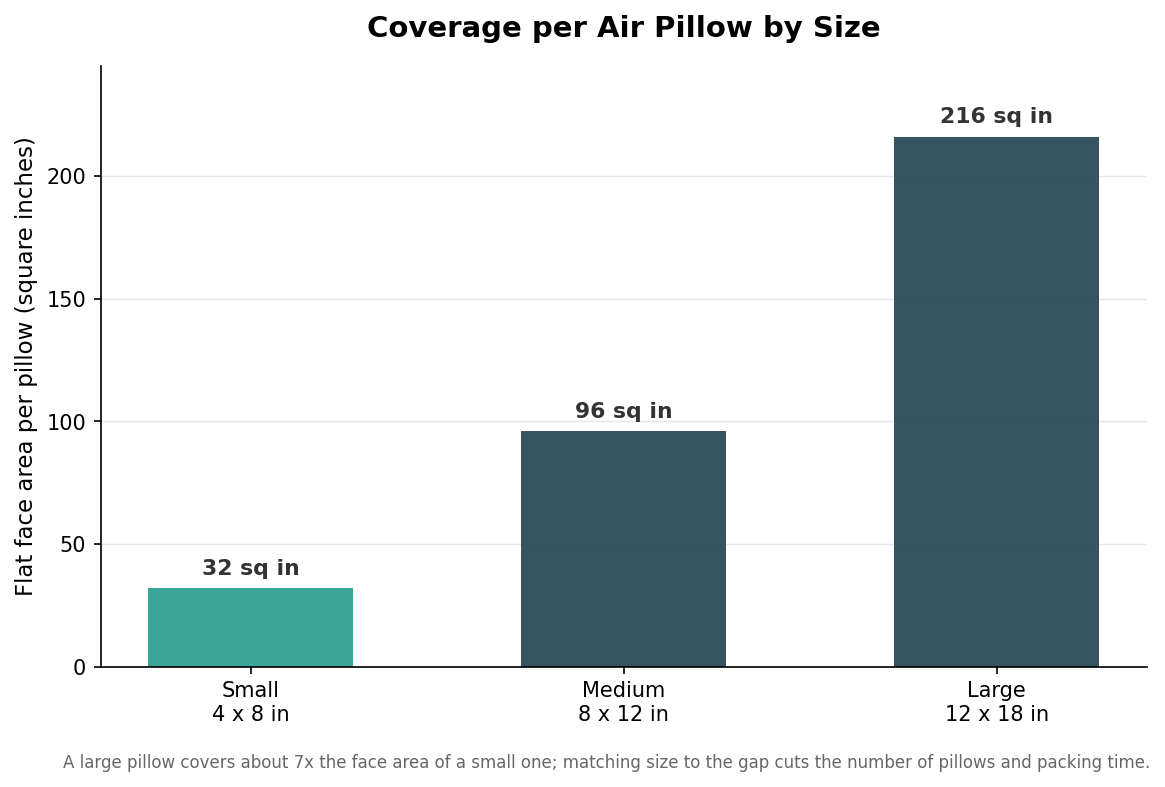
Printing your brand on the pillows does not change how they recycle, and that is the point. Because the film stays polyethylene, a printed pillow follows the same deflate-and-drop-off path as a plain one, so a brand can put its name on the void fill without creating a disposal headache, provided the customer is told how to recycle it. The genuine levers are the ones above: specify a recycled-content or compostable film, size the pillows so you use fewer of them per box, and print a short recycling instruction right on the pillow or the packing slip so the material actually reaches a drop-off instead of a landfill. Deciding the film grade and the disposal messaging together, at the point you design the packaging, is what turns air pillows from a material customers apologize for into one they can feel fine about. The plastic was never the villain; the missing instruction usually is.